Electric motor rewinding: process, tests and repair vs replacement
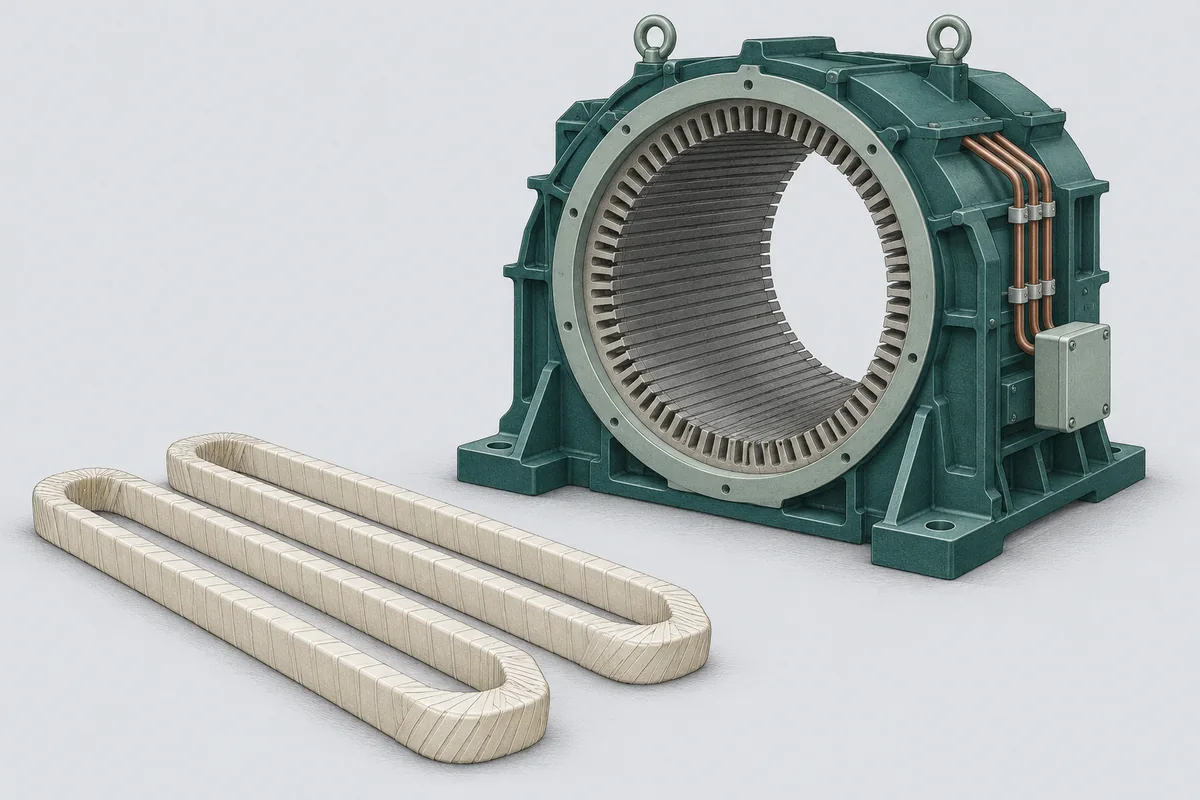
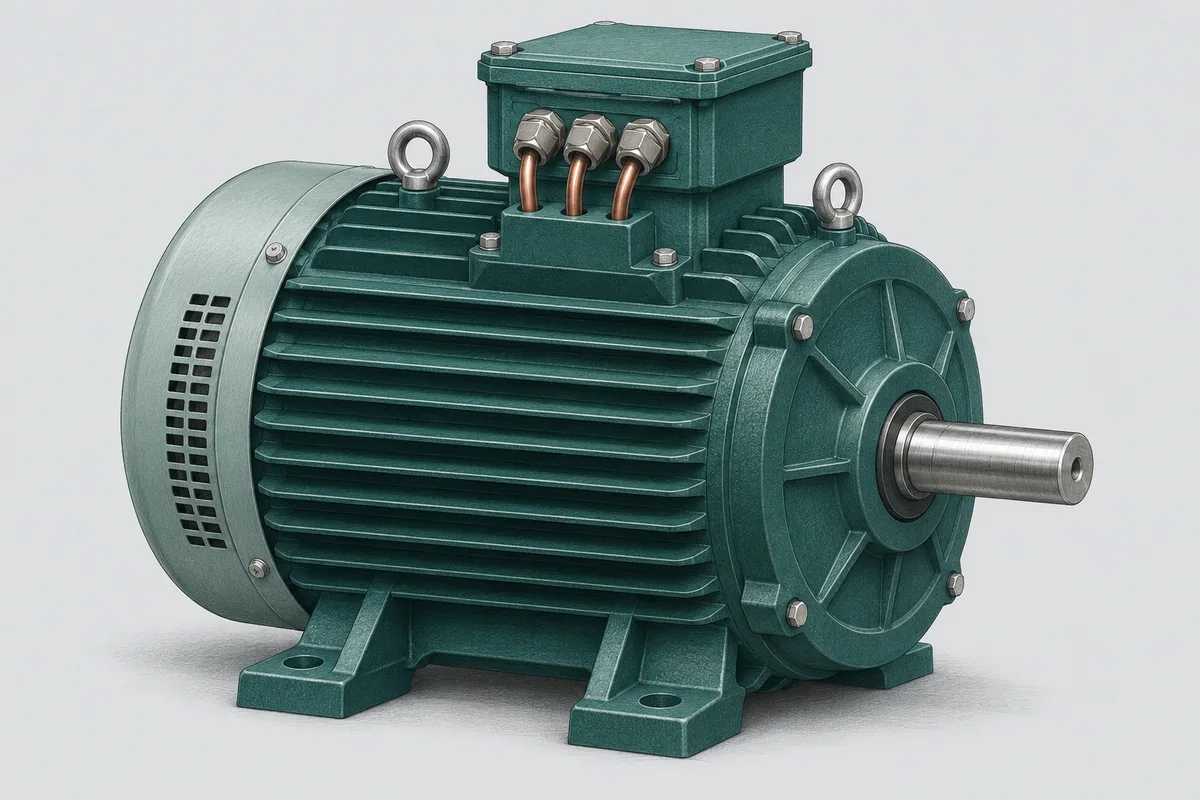
Electric motor rewinding restores a damaged winding by replacing its conductors and insulation. Whether it makes sense depends on the failure cause, the condition of the motor core and mechanical parts, and the cost of returning the equipment to reliable service.
When does a motor need rewinding?
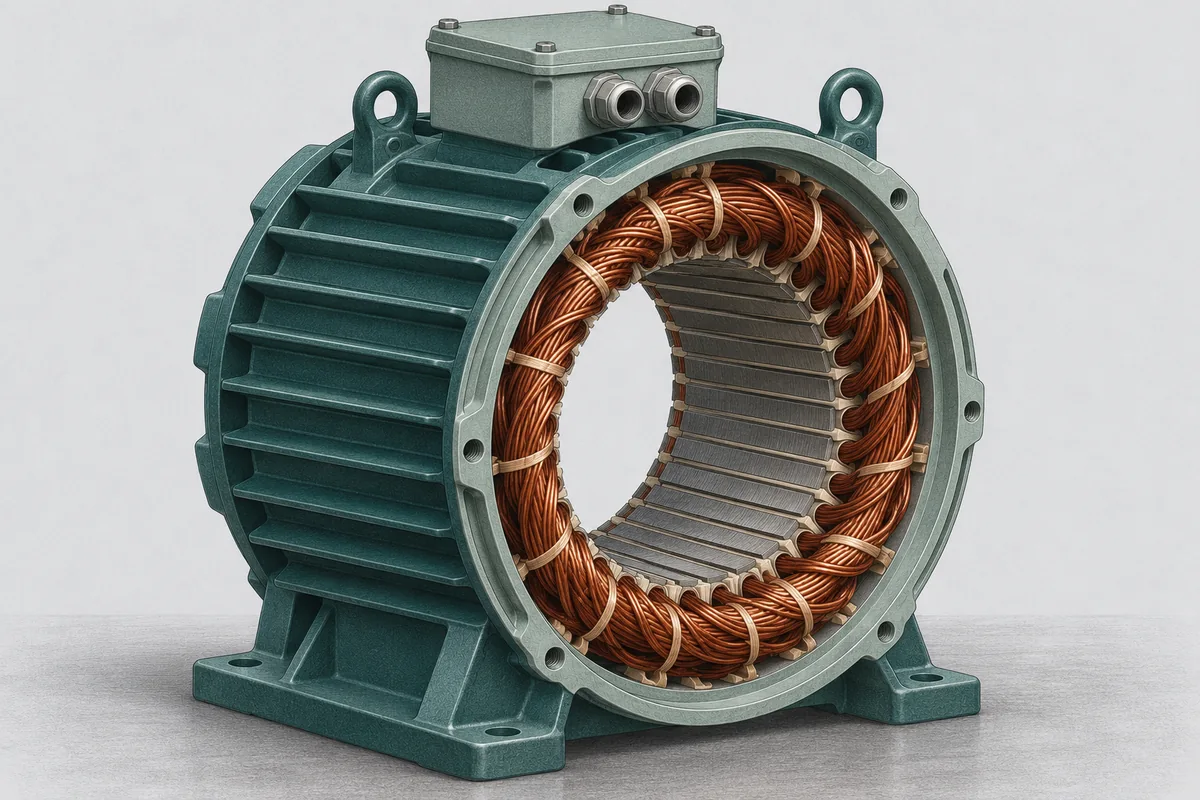
A confirmed winding fault, such as a turn-to-turn short, a fault to earth or severe insulation deterioration, can make rewinding appropriate. A tripping or overheating motor also warrants checks on the supply, cooling, bearings and driven load. Resolving the cause matters as much as repairing the failed part. If blocked ventilation or sustained overload caused the damage, the same operating condition can damage the repaired motor.
What happens during an industrial motor rewind?
- Inspect and document. The repairer assesses the electrical and mechanical condition, then records the original winding configuration before removing it.
- Assess the stator core. The winding is removed using a controlled process. The core is inspected for damage, and core-loss testing before and after removal can help identify changes in the laminations.
- Install the winding. New conductors and a compatible insulation system are fitted to the approved winding design. The shop impregnates and cures the winding to suit the specified system.
- Reassemble and verify. Mechanical work such as bearing replacement is handled where required. The repairer performs the agreed electrical and running checks and records the results.
Which tests should a rewind report include?
Ask for test results and the relevant acceptance criteria. Typical checks include insulation resistance, phase winding resistance, and a no-load run with current and vibration recorded. Surge or dielectric tests and load testing may be included when appropriate for the motor and the agreed scope. For high-voltage machines, set the test plan before work begins using the HT motor rewind checklist.
Should you rewind or replace the motor?
A rewind is worth pricing when the core and key mechanical parts are serviceable, the frame or shaft is special, or a replacement has a long lead time. Replacement may make more sense for a readily available standard motor, a machine with extensive core or rotor damage, or an installation where a more efficient correctly sized motor would materially reduce running costs.
Compare downtime, installation changes, energy use at the actual duty point and the agreed repair or replacement warranty. EASA and AEMT rewind studies found that established repair practices can maintain efficiency in the induction motors they tested. Ask how the proposed repair will preserve the winding design and verify the condition of the core.
Technical references
Discuss your motor with us
Send the motor nameplate, fault details and your shutdown window so we can discuss assessment and repair.