Industrial electric motors: types and how they work
An industrial electric motor turns electrical energy into shaft rotation. The motor type, the way it starts, and the load it drives all affect how it should be specified, maintained and repaired.
How do electric motors work?
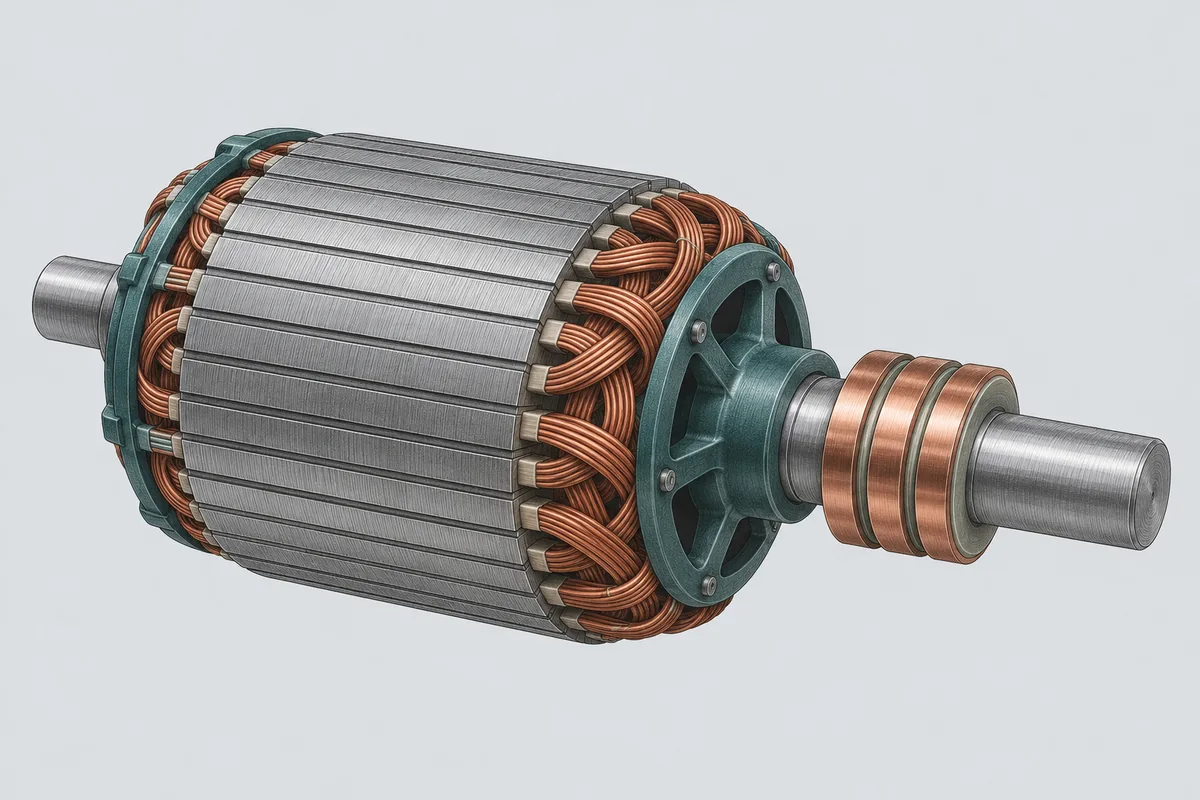
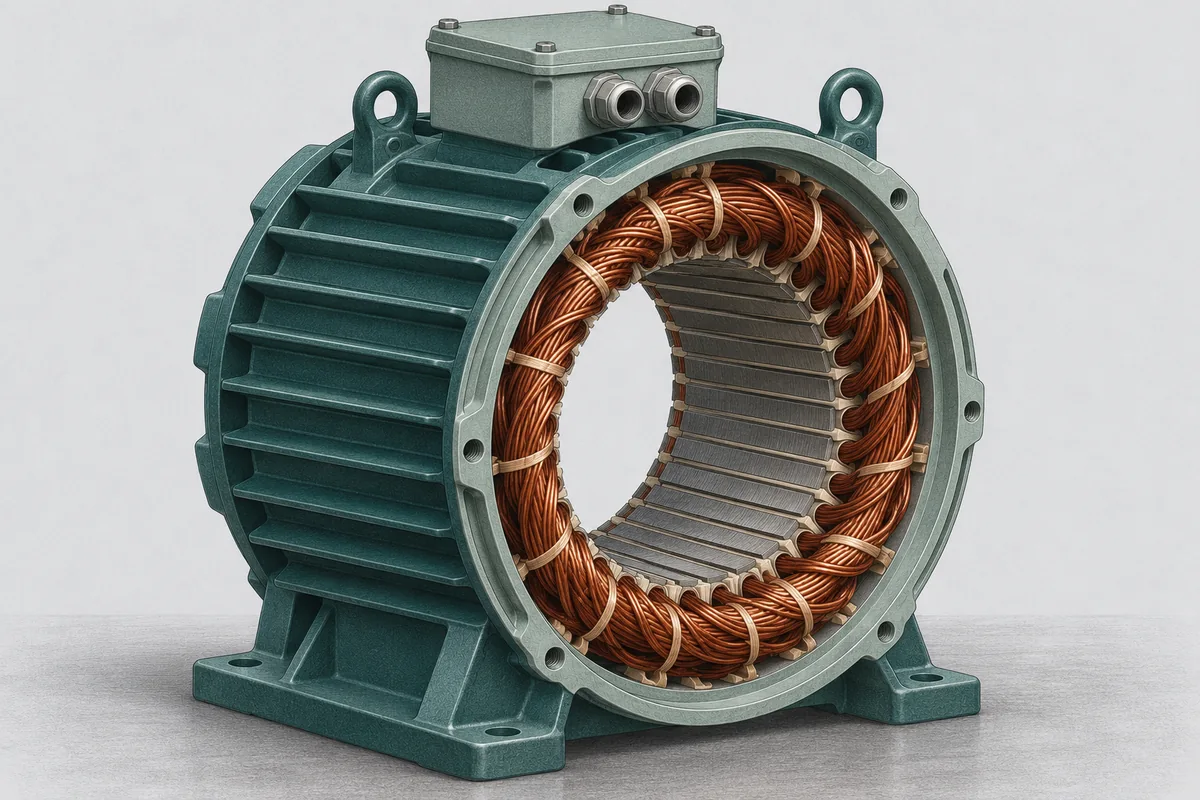
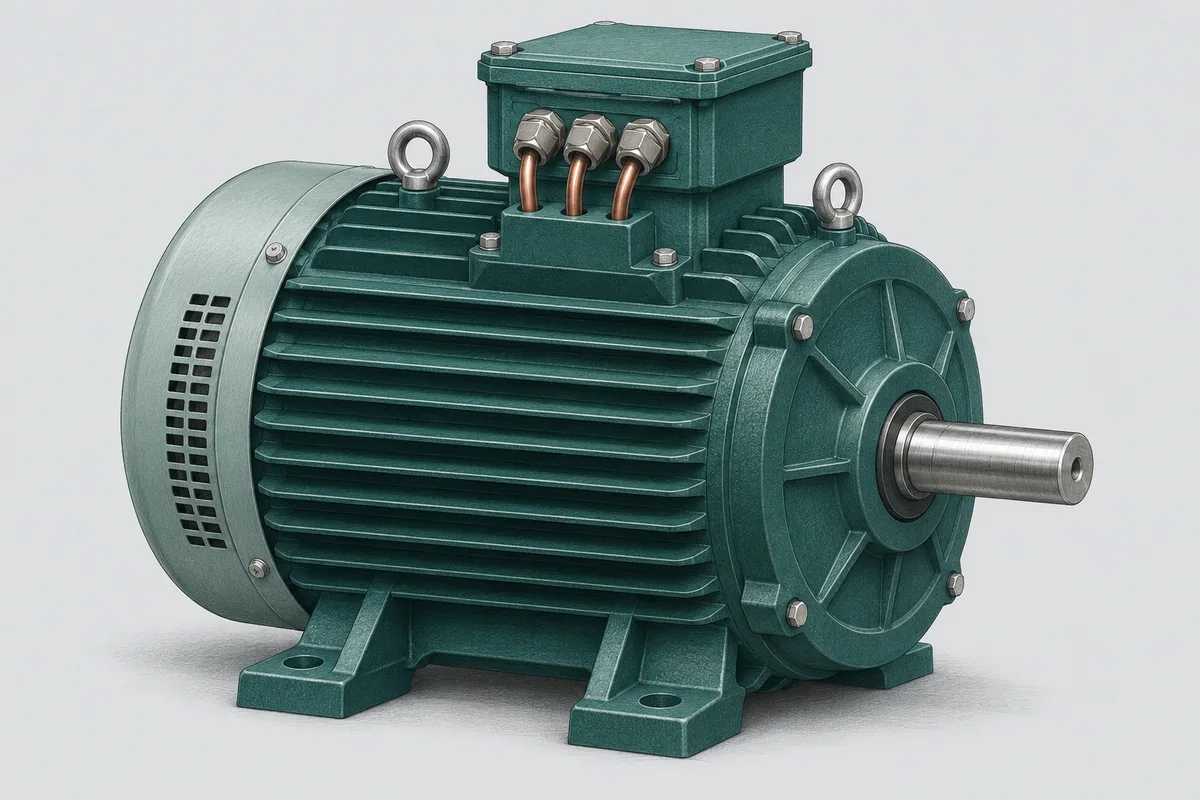
The stator is the stationary part of the motor. In a three-phase AC motor, alternating current in the stator windings creates a rotating magnetic field. In an induction motor, that field induces current in the rotor. The interaction between the two magnetic fields produces torque, which turns the shaft and drives equipment such as a pump, fan or conveyor.
A four-pole motor on a 50 Hz supply has a synchronous speed of 1,500 rpm. An induction motor under load runs slightly below that speed. The difference is called slip. The rated operating speed on the nameplate is the figure to compare with the driven equipment’s requirement.
Common industrial motor types
- Squirrel-cage induction motors
- Widely used for pumps, fans, blowers and conveyors. The rotor has conductive bars joined at each end, and there are no brushes in its rotor circuit. Many installations use a variable-frequency drive (VFD) when the process needs adjustable speed.
- Wound-rotor induction motors
- Also called slip ring motors. The rotor has windings connected through rings and brushes to an external circuit, which can be used to manage the starting torque and current of heavy loads.
- Synchronous motors
- Operate at the same speed as the rotating stator field in steady operation. Applications include large compressors and drive systems with specific speed or efficiency requirements.
- DC motors
- Still found in some older production lines, including adjustable-speed installations. Brushed types have a commutator and brushes that need periodic inspection.
What to check on the motor nameplate
Photograph the nameplate before planning service or replacement. Record the output in kW or HP, rated voltage and current, phase and frequency, rated speed, frame size, duty and enclosure rating. Add the mounting position, driven equipment and starting arrangement, such as a VFD, soft starter or rotor-resistance starter.
For maintenance teams. Keep the nameplate photo with baseline current, vibration and temperature readings taken under known operating conditions. A trend is easier to interpret when you can compare readings from the same load and speed.
When to investigate a motor fault
Recurring trips, an increase in vibration, unusual bearing noise or rising temperature are reasons to investigate. A symptom can originate in the supply, cooling system, bearings, coupling or driven load, as well as in the windings. Record the sequence of events and the protection trip before sending a motor for assessment. Our guide to electric motor rewinding explains when winding damage makes a rewind worth considering.
Technical references
Discuss your motor with us
Share the nameplate, the equipment it drives and any symptoms or trip history with our Pathankot workshop.