Slip ring motors: how they work and where they’re used
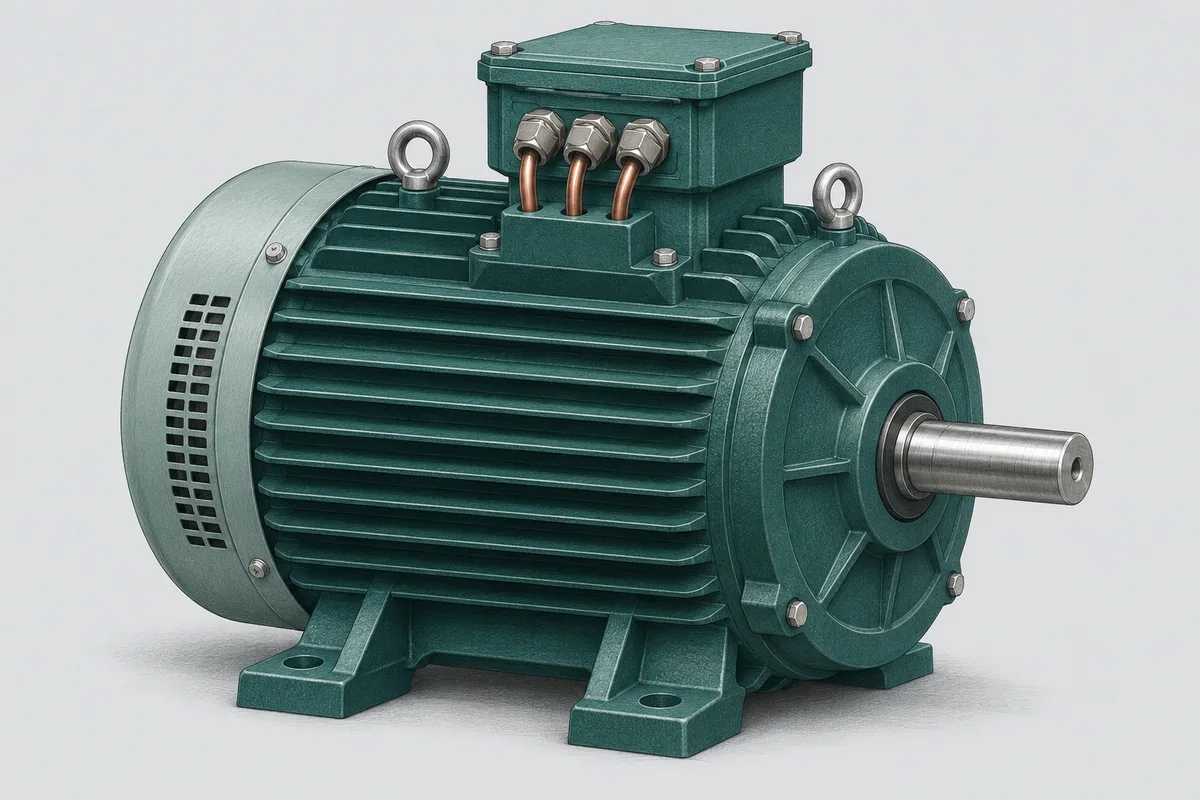
A slip ring motor is a wound-rotor induction motor. Slip rings and brushes connect its rotating rotor windings to an external circuit, allowing a suitable starter to increase starting torque while limiting inrush current.
How a slip ring motor starts
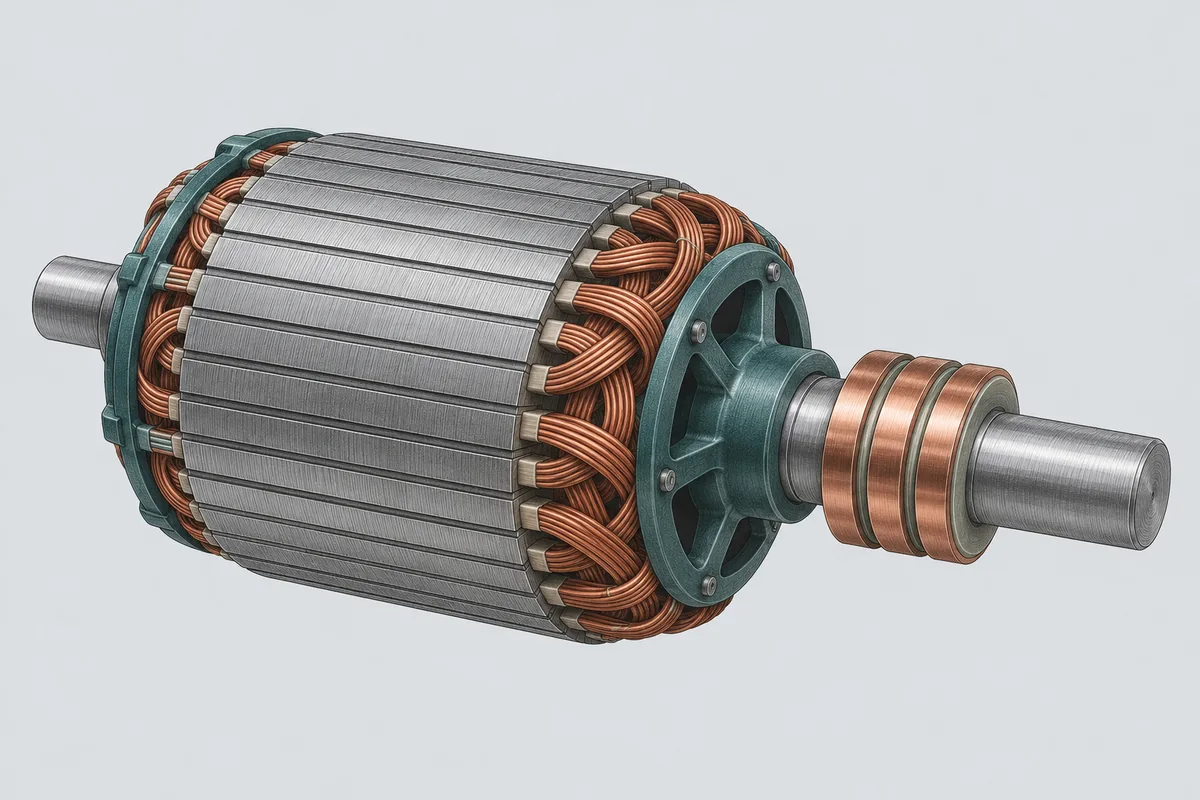
In a common three-phase design, three insulated rings turn with the shaft. Stationary carbon brushes contact the rings and connect the rotor winding to an external resistor starter. During starting, a correctly sized external resistance changes the motor’s torque–speed curve so it can provide higher torque at low speed while drawing less starting current than it would with the rotor shorted.
As the motor accelerates, the starter progressively removes resistance. In a typical starting arrangement the rotor circuit is then shorted. Some motors have a mechanism that lifts the brushes after starting. The exact sequence depends on the motor and starter design.
Where slip ring motors are used
Loaded conveyors, crushers and grinding mills can demand considerable torque during acceleration. A slip ring motor can suit a high-inertia or difficult-to-start load, especially where the supply network limits allowable starting current. A squirrel-cage motor has a simpler rotor and fewer wear parts. When comparing options for a retrofit, consider the load’s torque and inertia, available starting current, duty cycle and the total cost of keeping the equipment running.
What to inspect when starting performance changes
- Brushes and holders. Uneven wear, sticking, incorrect pressure or poor contact can cause heating or sparking.
- Slip rings. Grooves, pitting and uneven surface condition can affect brush contact. Conductive brush dust can contaminate the compartment.
- Rotor circuit and starter. A connection fault, an uneven resistance across phases or a starter sequencing problem can cause weak acceleration, repeated trips or heating.
- Driven equipment. A jammed load or a mechanical change can also extend acceleration time. Record whether the symptoms occur unloaded, loaded or only during starting.
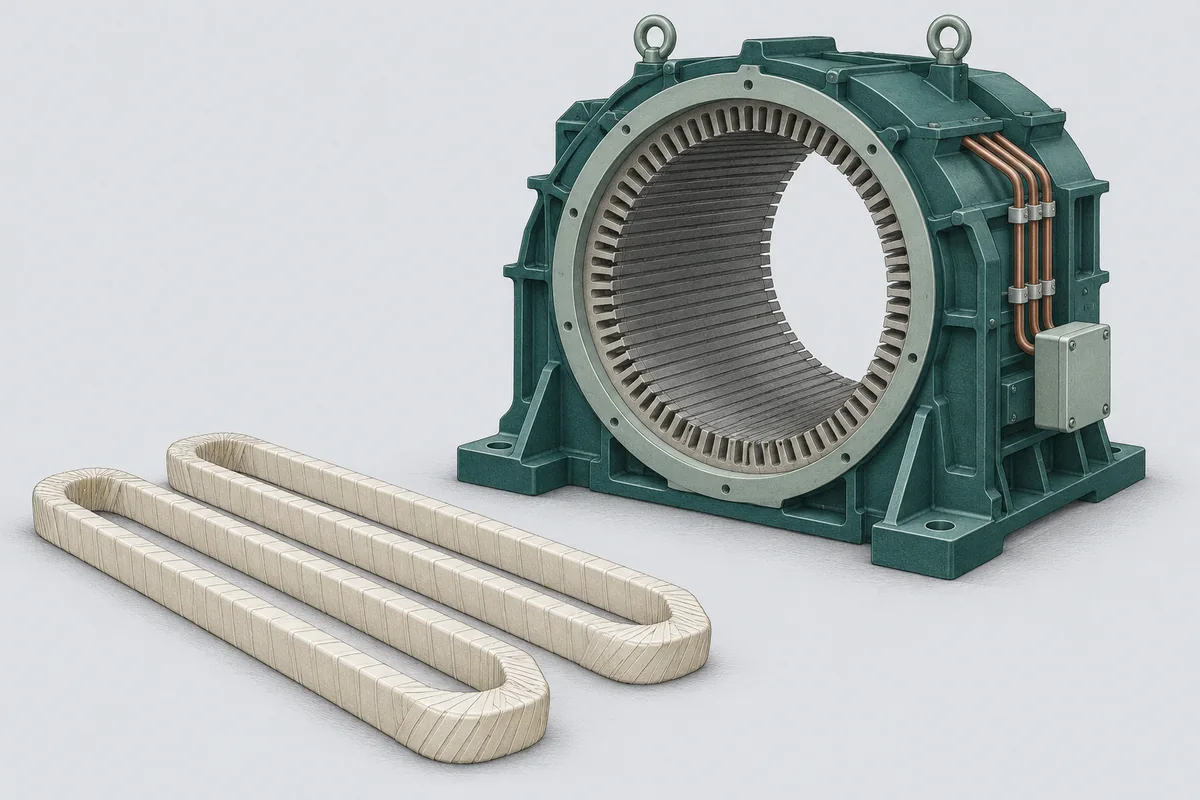
Inspection and electrical measurements belong in a qualified maintenance or repair scope. Starter faults and brush wear can often be addressed with targeted service. A rotor or stator rewind is considered when testing confirms winding damage.
What to share for a slip ring motor assessment
Send the motor and rotor nameplate data, the starter type, the driven equipment and the point in the starting sequence when the fault occurs. Include any recent trip logs and existing test results. For equipment such as a 6.6 kV motor, the HT motor rewinding guide explains what to specify if the stator winding is damaged.
Technical references
Discuss your motor with us
Tell us the motor rating, starter type and fault symptoms so we can discuss the scope of inspection.