HT motor rewinding: what to specify and test
HT (high-tension) motor rewinding restores a damaged high-voltage winding. For industrial motors rated 3.3 kV, 6.6 kV or 11 kV, agree the coil design, insulation system and test plan upfront to make quotations and acceptance reports comparable.
What is different about an HT motor rewind?
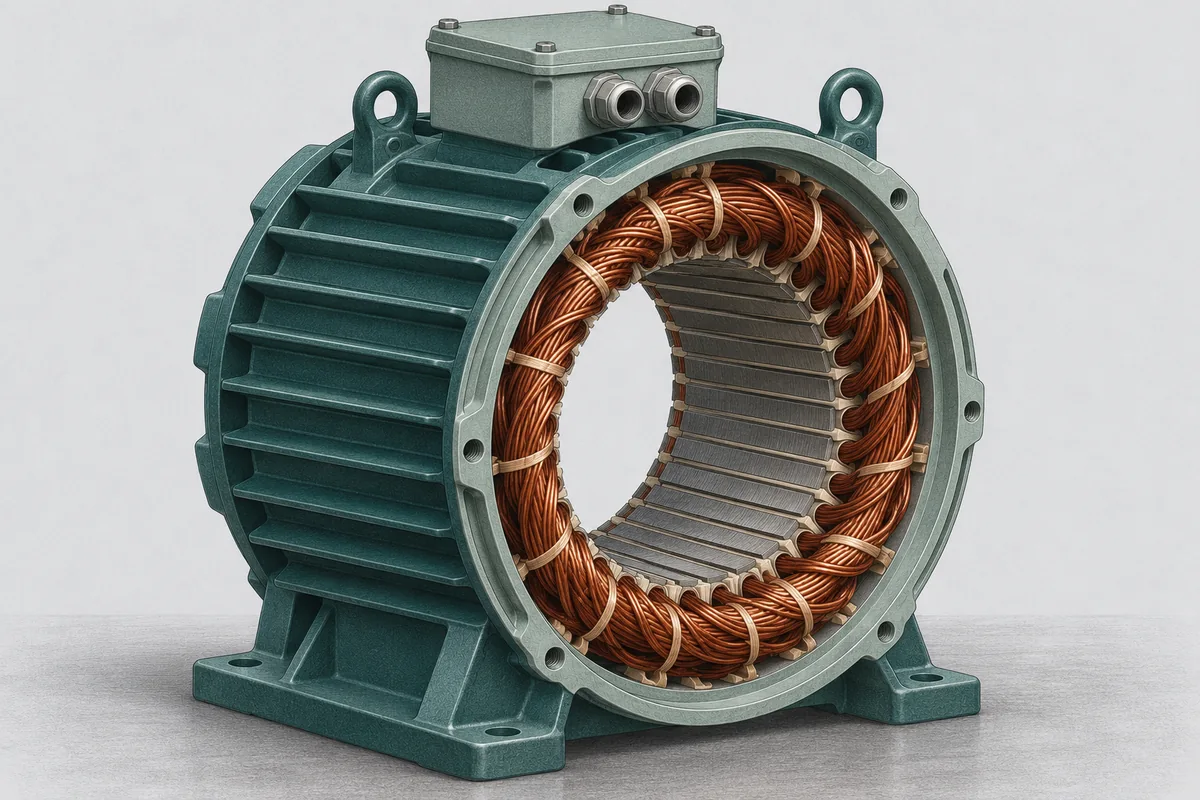
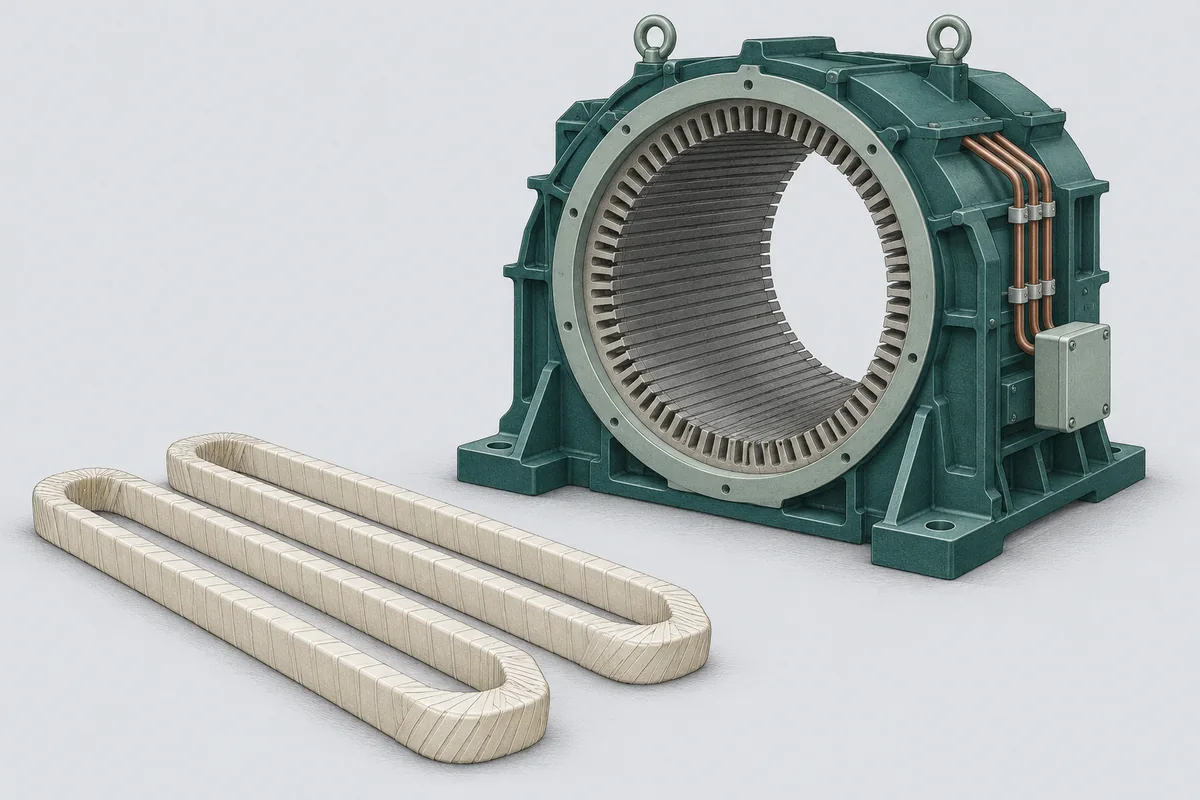
Many HT motors use form-wound coils shaped to fit the stator slots. The winding design specifies the conductor arrangement, coil geometry, groundwall insulation and end-winding support. The groundwall insulates the winding from the grounded stator core. Depending on the original design and voltage, the coil system can also use conductive slot coating and electrical stress grading near the slot exits.
Before the winding is removed, the repairer records its layout and checks the core and the extent of the damage. Confirm that the quotation identifies the rated voltage, whether the work is a full or partial rewind, how the original design is documented, and which work is included on the bearings, rotor and cooling system.
What does VPI do?
Vacuum pressure impregnation (VPI) uses vacuum and pressure to draw compatible resin into a winding insulation system, followed by curing. This helps consolidate the winding and fill voids where the specified system is designed for VPI. The insulation, resin and processing method should be compatible with each other and with the agreed design. Other form-wound systems can use pre-impregnated coils, so confirm the method in the quotation.
Which acceptance tests should you agree upfront?
- Core condition and coil checks. Agree how the shop will document stator core condition and verify coils before installation.
- Winding checks. Define insulation resistance, polarisation index (PI) where applicable, and winding resistance checks. Agree any surge comparison or dielectric withstand tests with their method and acceptance criteria.
- Additional diagnostics and running checks. Discuss partial discharge or dissipation-factor testing where specified. Define the assembled motor’s no-load, vibration or load-test requirements and any customer witness points.
Ask the repairer to identify the original equipment manufacturer’s requirements or the applicable standard and revision in the test plan. The appropriate test levels depend on the winding and the test stage. Compare signed results with the agreed criteria before releasing the motor for return to service.
What to send with an HT rewind enquiry
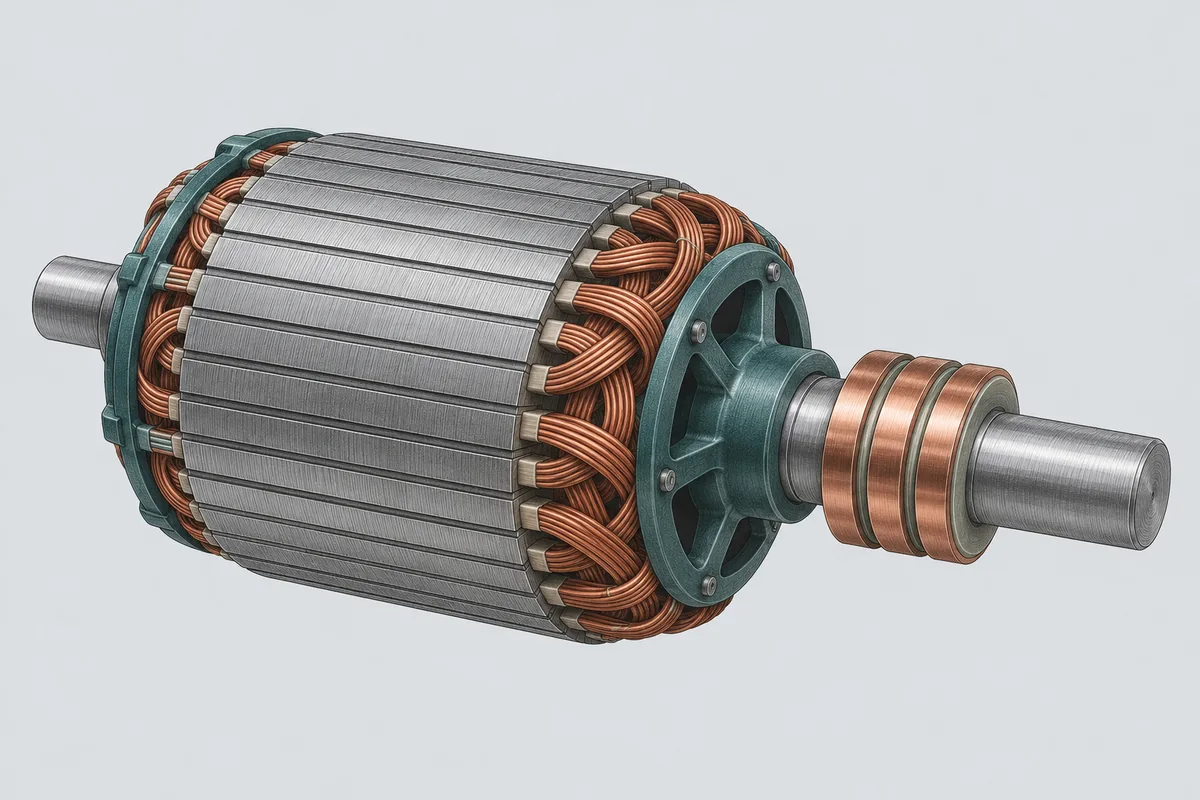
Include the nameplate voltage, output and speed, motor serial number, driven equipment, duty and starting arrangement. Attach the fault timeline and available protection trips, inspection photos or earlier test reports. State the shutdown window, any witness requirements and whether the scope includes mechanical overhaul or commissioning support. If the machine has a wound rotor, include the slip ring motor and starter details as well.
Technical references
Discuss your motor with us
Share the rated voltage, motor output, failure report and any test or witness requirements with our Pathankot team.